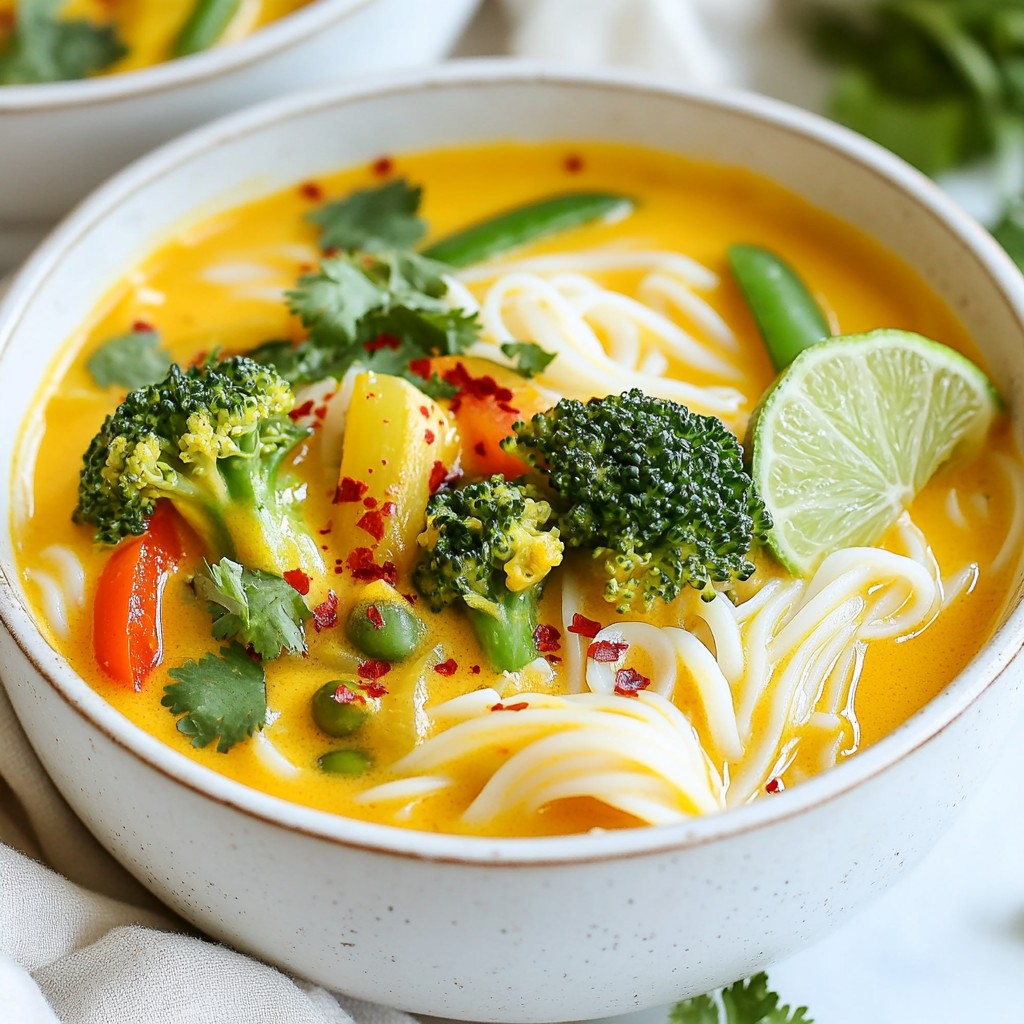
Looking for a warm and tasty dish? This Coconut Curry Noodle Soup is flavorful and easy to make. With fresh ingredients and simple steps, you can enjoy a bowl of comfort in no time. Whether you're a busy parent or a young foodie, this recipe is perfect for you. Get ready to impress your family or guests with this delicious meal that’s packed with nutrients and taste!
Why I Love This Recipe
- Deliciously Creamy: The rich coconut milk creates a velvety texture that enhances the overall flavor of the soup.
- Quick and Easy: This recipe comes together in just 30 minutes, making it perfect for a weeknight dinner.
- Customizable: You can easily swap in your favorite vegetables or proteins to suit your taste.
- Vibrant Flavors: The combination of ginger, garlic, and red curry paste creates a delightful taste experience.
Ingredients
Fresh Ingredients for Coconut Curry Noodle Soup
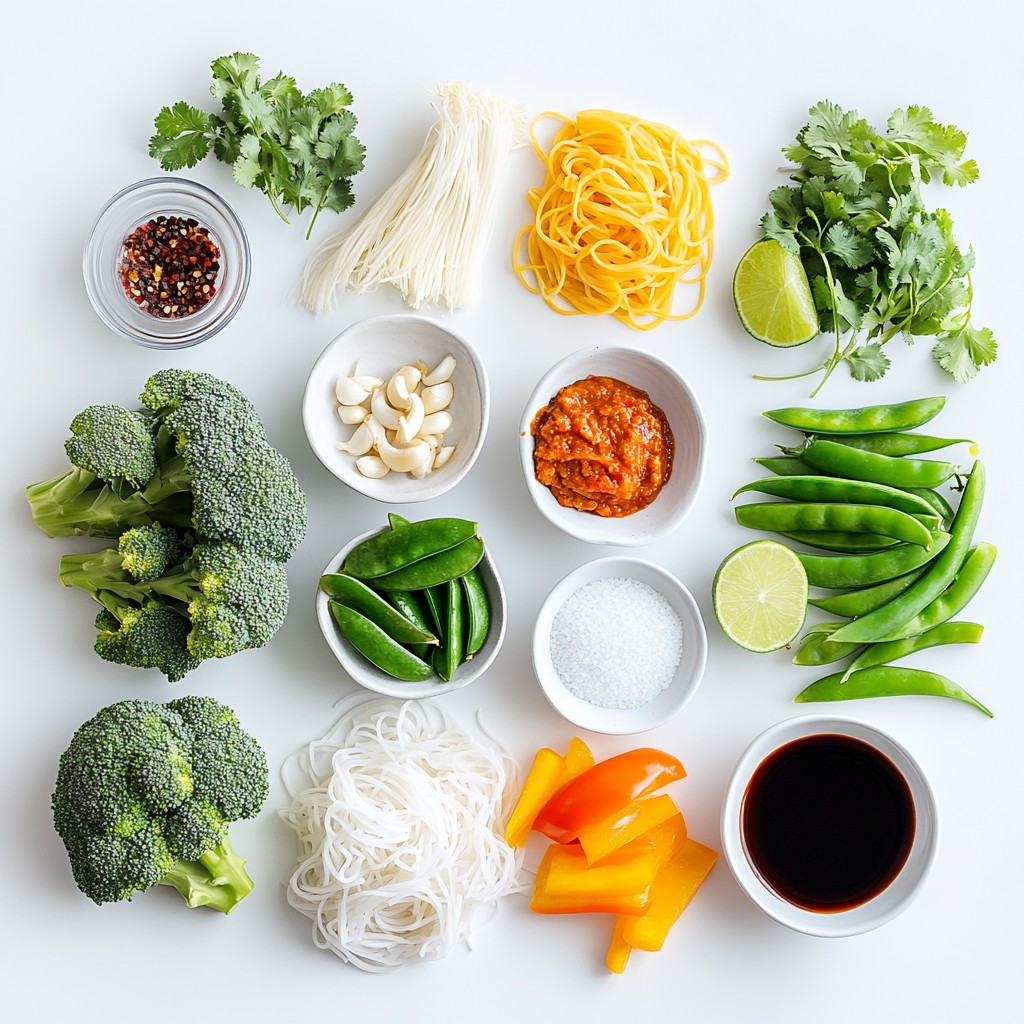
For this Coconut Curry Noodle Soup, you will need a few fresh ingredients. These add great taste and color to the dish. Here is what you'll need:
- 1 medium onion, finely chopped
- 3 cloves garlic, minced
- 1-inch piece of ginger, grated
- 1 cup broccoli florets
- 1 cup bell peppers, sliced (any color)
- 1 cup snap peas
- Fresh cilantro, for garnish
- Lime wedges, for serving
These fresh items give the soup its vibrant flavors and textures.
Pantry Staples Needed
You will also need some pantry staples that help build the base of the soup. Here’s what to gather:
- 1 tablespoon coconut oil
- 2 tablespoons red curry paste
- 1 can (13.5 oz) coconut milk
- 3 cups vegetable broth
- 1 tablespoon soy sauce
- 1 teaspoon brown sugar
- 200g rice noodles
These pantry items are easy to find and will create a rich and creamy soup.
Optional Garnishes for Serving
Garnishes can elevate your soup. Here are some options to consider:
- Fresh cilantro, for a pop of color
- Lime wedges, to add a zesty kick
- Red chili flakes, for extra heat
These garnishes not only taste great but also make your dish look amazing!
Step-by-Step Instructions
Preparing the Base of the Soup
To start, I heat 1 tablespoon of coconut oil in a large pot over medium heat. The oil adds a nice flavor. Then, I add 1 finely chopped onion. I sauté it for about 5 minutes or until it turns soft. Next, I stir in 3 minced garlic cloves and a 1-inch piece of grated ginger. I cook this mix for 1-2 minutes. The aroma fills the kitchen!
Now, I add 2 tablespoons of red curry paste. I mix it well with the onion, garlic, and ginger. I let it cook for about 1 minute. Then, I pour in 1 can of coconut milk and 3 cups of vegetable broth. I stir everything together and bring it to a gentle simmer.
After that, I add 1 tablespoon of soy sauce and 1 teaspoon of brown sugar. I stir again and let the soup simmer for about 5 minutes. This is where the magic happens, and the flavors come together.
Cooking the Noodles
While the soup simmers, I cook 200 grams of rice noodles. I follow the package instructions, usually boiling them for about 5-7 minutes. Once done, I drain the noodles and set them aside. Cooking them separately helps keep their texture just right.
Final Assembly and Serving Suggestions
Now it’s time for the fun part! I divide the cooked rice noodles into serving bowls. Then, I ladle the warm coconut curry soup over the noodles. To make it pretty, I garnish each bowl with fresh cilantro and lime wedges. If I want a little heat, I sprinkle some red chili flakes on top.
For the best look, I serve the soup in deep bowls. The bright colors of the veggies and the green cilantro make it pop. Enjoy your warm, comforting soup!
Tips & Tricks
Making the Soup Extra Flavorful
To boost the flavor of your coconut curry noodle soup, use fresh ingredients. Fresh onion, garlic, and ginger give a strong taste. I like to sauté them until they smell great. Use high-quality red curry paste, too. It adds depth and warmth. If you want a richer taste, add a splash of soy sauce and a teaspoon of brown sugar. This mix makes the soup sweet and savory.
Adjusting Spice Levels
If you love heat, add red chili flakes for extra spice. You can mix these in while cooking. If you want a milder soup, skip the chili flakes. You can also adjust the amount of curry paste. Start with one tablespoon and taste. If you want more heat, add a little more. Remember, it is easier to add than to take away!
Best Practices for Cooking Noodles
Cooking rice noodles is simple, but timing is key. Follow the package instructions carefully. Usually, it takes just 4-6 minutes. After cooking, drain them and rinse with cold water. This stops the cooking and keeps them from sticking. When serving, place the noodles in bowls first. Then, pour the hot soup over them. This keeps the noodles warm and tasty!
Pro Tips
- Balance Flavors: Adjust the sweetness and saltiness by adding more brown sugar or soy sauce according to your taste preference.
- Vegetable Variations: Feel free to substitute or add any vegetables you have on hand, such as carrots, zucchini, or bok choy for added nutrition.
- Rice Noodle Cooking: Make sure to rinse the rice noodles after cooking to prevent them from clumping together when added to the soup.
- Garnish for Freshness: Always top with fresh cilantro and lime just before serving to enhance the flavors and add freshness to your dish.
Variations
Vegetarian and Vegan Options
You can easily make this soup meat-free. Simply skip any animal products. Use vegetable broth instead of chicken broth. The coconut milk adds a creamy touch and great flavor. You can add more veggies like carrots and zucchini. Tofu is a great choice for protein. Just press it, cube it, and toss it in. It will soak up all the tasty flavors.
Protein Additions (Chicken, Tofu, Shrimp)
If you prefer meat, chicken is a popular choice. Use boneless, skinless chicken breast. Slice it thin and cook it in the pot before adding the broth. Shrimp is another tasty option. Add it when you put in the veggies. It cooks quickly and adds a nice touch. Tofu is a great plant-based option. It gives the soup a nice texture and protein.
Alternative Vegetables to Use
Feel free to switch up the veggies in this soup. Carrots, spinach, or kale work well. They add color and nutrients. You can also try mushrooms for a meaty flavor. Sweet potatoes give a hint of sweetness and heartiness. Just cut them into small pieces so they cook well. Mix and match to find your favorite combo!
Storage Info
How to Store Leftovers
To store leftovers, let the soup cool first. Use an airtight container. Place the soup in the container and seal it tightly. Store it in the fridge for up to three days. This keeps the soup fresh and tasty.
Freezing Coconut Curry Noodle Soup
You can freeze coconut curry noodle soup, but it’s best to freeze it without the noodles. Cooked noodles may become mushy upon thawing. Pour the cooled soup into freezer-safe bags or containers. Remove excess air to prevent freezer burn. Label the bags with the date. You can freeze it for up to three months.
Reheating Instructions
To reheat, pour the soup into a pot. Heat it over medium heat until warm. Stir occasionally to avoid sticking. If the soup is too thick, add a little vegetable broth or water. For microwave reheating, place the soup in a microwave-safe bowl. Heat for 1-2 minutes, stirring halfway. Enjoy your delicious soup warm!
FAQs
What can I use instead of coconut milk?
You can use almond milk or cashew cream. These options keep it creamy. Soy milk works too, but it may change the flavor slightly. If you want a stronger taste, try adding some nut butter. It adds richness without coconut milk.
Can I use different types of noodles?
Yes, you can use any noodles you like. Rice noodles are great, but egg noodles work too. You can even try whole wheat noodles for a healthier twist. Just make sure to cook them separately first. Then, mix them in with the soup before serving.
How spicy is the soup, and can I make it milder?
The soup has a nice kick from the red curry paste. If you want it milder, use less curry paste. You can also skip the red chili flakes for garnish. Adding more coconut milk can help tone down the heat too. Adjust it to suit your taste!
This coconut curry noodle soup is simple and fun to make. We covered fresh and pantry staples, optional garnishes, and all the steps for preparation. You can tweak the flavor, spice levels, and mix in proteins or veggies based on your taste. Proper storage helps keep leftovers fresh for later meals. Remember, hot or mild, this soup can fit your needs. Enjoy the process as much as the meal!