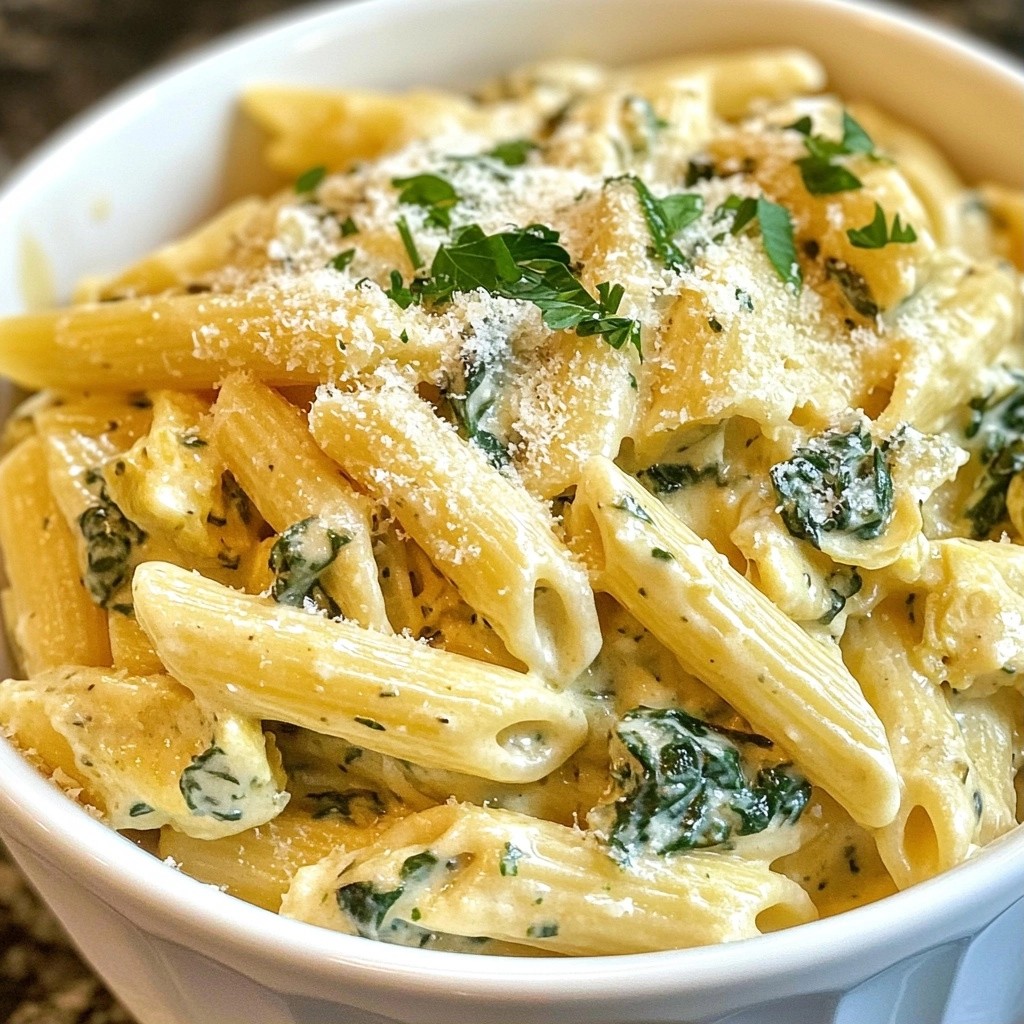
Are you craving a creamy, comforting meal that’s quick and easy? Look no further! My Creamy Pressure Cooker Spinach Artichoke Pasta Delight is perfect for busy nights. With just a few simple ingredients, you can whip up a rich and flavorful dish in no time. This recipe combines penne pasta with artichokes and spinach, creating a tasty dinner everyone will love. Let’s dive into the steps and enjoy this delicious, homemade treat!
Why I Love This Recipe
- Quick and Easy: This creamy pasta dish comes together in just 20 minutes, making it perfect for busy weeknights.
- Rich and Flavorful: The combination of cream cheese and Parmesan creates a luscious sauce that elevates the dish.
- Healthy Ingredients: With spinach and artichokes, this recipe packs in nutrients while still being delicious.
- Versatile: This recipe can easily be adapted with different pasta shapes or added proteins to suit your taste.
Ingredients
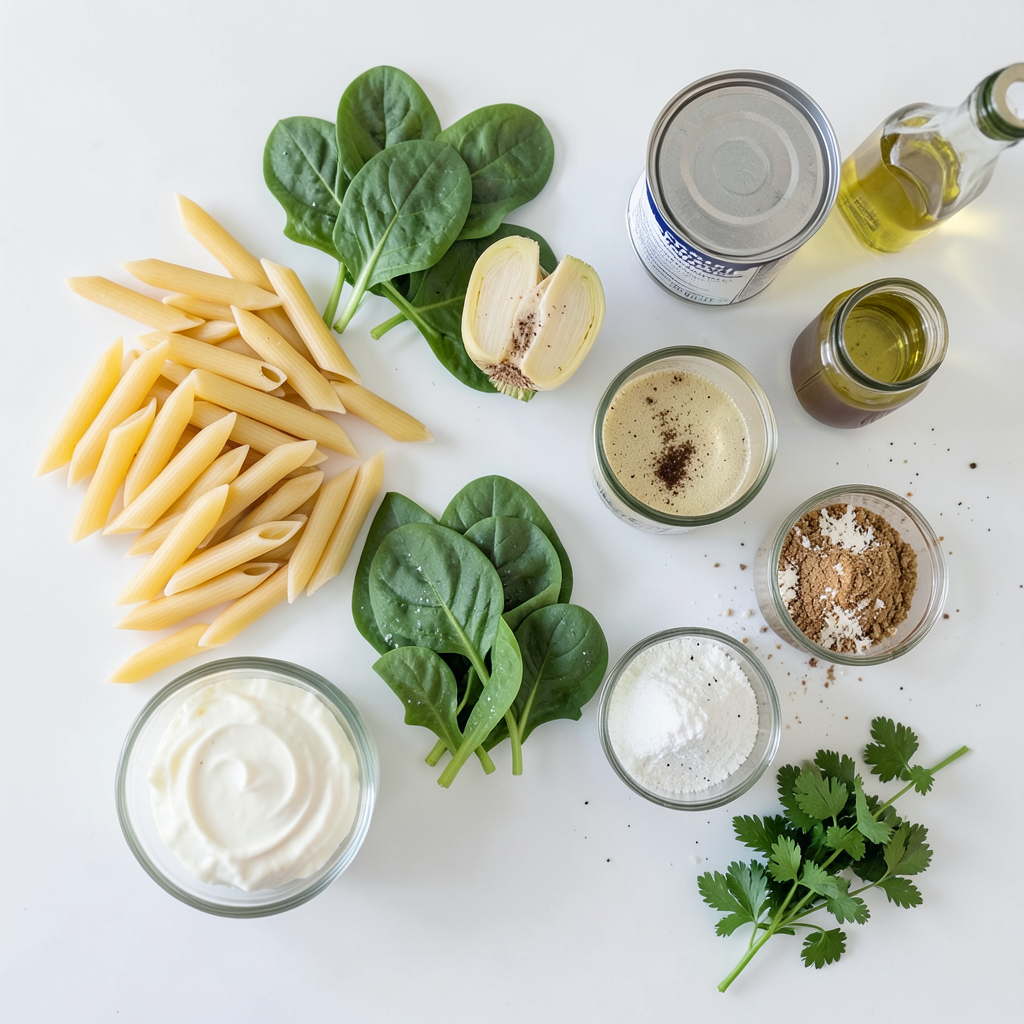
Complete Ingredient List
- 12 ounces penne pasta
- 1 can (14 ounces) artichoke hearts, drained and roughly chopped
- 5 ounces fresh spinach, roughly chopped
- 1 cup cream cheese, softened
- 1 cup vegetable broth
- 1 cup grated Parmesan cheese
- 1/2 teaspoon garlic powder
- 1/2 teaspoon onion powder
- Salt and pepper to taste
- Olive oil for drizzling
- Fresh parsley for garnish
To make this dish shine, I lean on a mix of fresh and pantry ingredients. The penne pasta is the perfect shape to hold the creamy sauce. Artichoke hearts bring a nice, tangy flavor. Fresh spinach adds color and nutrients.
I use cream cheese for that rich, creamy texture. The vegetable broth ties everything together, giving the pasta a nice depth. Garlic and onion powders add warmth and flavor without being overpowering. I finish the dish with salt and pepper to taste, plus a drizzle of olive oil for richness.
Lastly, I love to garnish with fresh parsley. It adds a pop of color and freshness. This mix of ingredients creates a comforting yet gourmet meal that anyone can enjoy.
Step-by-Step Instructions
Preparation Steps Overview
First, grab your pressure cooker and set it to the sauté function. Drizzle a little olive oil into the pot. Next, add the chopped artichoke hearts and spinach. Stir them for about 2 to 3 minutes. You want the spinach to wilt and blend with the artichokes.
After that, add the penne pasta to the pot. Pour in the vegetable broth, making sure the pasta is fully submerged. This step is key to getting the pasta perfectly cooked.
Then, sprinkle in the garlic powder, onion powder, salt, and pepper. This will layer in great flavor as the pasta cooks.
Cooking the Pasta
Now, it's time to lock the lid of the pressure cooker. Make sure it’s secure to avoid any mess. Set your cooker to high pressure for 4 minutes. During this time, the steam will cook the pasta while soaking up all those delicious flavors.
Once the 4 minutes are up, do a quick release of the pressure. Carefully remove the lid, letting the steam escape safely.
Final Touches
Next, it’s time for the magic. Stir in the softened cream cheese and grated Parmesan cheese. This will create a rich, creamy sauce that coats every piece of pasta. Keep stirring until everything melts together smoothly.
If you find the pasta is too thick, add a bit more vegetable broth. This helps you achieve the perfect consistency. Taste and adjust the seasoning with salt and pepper as needed.
Finally, serve your dish hot. Garnish with fresh parsley and an extra sprinkle of Parmesan if you like. Enjoy your creamy pressure cooker spinach artichoke pasta!
Tips & Tricks
Achieving the Creamy Texture
To get a smooth and creamy texture, start with softened cream cheese. This step is vital. Soft cream cheese blends well without lumps. If your cream cheese is cold, it won't mix well. I recommend leaving it out for about 30 minutes before cooking.
Adding broth helps achieve your desired consistency. If the dish feels too thick, just pour in a bit more vegetable broth. Start with a tablespoon at a time. Stir well and see how it changes. Adjust until you find the perfect creaminess for your taste.
Pressure Cooker Best Practices
When using a pressure cooker, you have two release methods: quick release and natural release. Quick release means you let out the steam right after cooking. This method is perfect for pasta. It keeps it tender but not mushy.
Natural release lets the pressure drop on its own. This method takes longer but can help flavors blend. For this pasta recipe, quick release is best. It gives you pasta ready to enjoy in no time.
Choose the right settings on your pressure cooker. High pressure works best for cooking pasta. Always check your manual for details. Each model may have slight differences.
Serving Suggestions
You can top your pasta with various garnishes. Fresh parsley adds a bright color and taste. A sprinkle of extra Parmesan cheese makes it rich and tasty. You can also try crushed red pepper for a little heat.
For sides, consider a simple salad. A green salad with a light vinaigrette pairs nicely. Garlic bread is another great option. It’s perfect for scooping up that creamy sauce. Enjoy your meal with friends for a fun dinner!
Pro Tips
- Al Dente Perfection: For perfectly cooked pasta, set the pressure cooker to 4 minutes, but remember it will continue cooking slightly after you release the pressure.
- Variations Galore: Feel free to add other vegetables such as mushrooms or bell peppers for additional flavor and nutrition.
- Cheese Choices: Experiment with different cheeses like feta or gouda for a unique twist on the creamy sauce.
- Storing Leftovers: Store any leftovers in an airtight container in the fridge for up to 3 days; reheat on the stovetop with a splash of broth for best results.
Variations
Ingredient Swaps
You can change the pasta type for this dish. Try using fettuccine or bowtie pasta. They both work well with the sauce. If you want more protein, add cooked chicken or shrimp. Just toss them in when mixing the pasta.
Flavor Enhancements
Boost the flavor with extra spices and herbs. A pinch of red pepper flakes adds heat. Fresh basil or thyme gives a nice twist too. You can also mix in different cheeses. Creamy mozzarella or sharp cheddar can change the taste. Each cheese brings its own unique flavor.
Vegan and Gluten-Free Options
For a vegan version, swap cream cheese with plant-based cream cheese. This keeps the dish creamy without dairy. Use gluten-free pasta if you need it. There are many types available, like rice or chickpea pasta. These options make the dish friendly for all diets.
Storage Info
Refrigeration Guidelines
To store leftovers, let the pasta cool down first. Place it in an airtight container. This helps keep the dish fresh. I suggest using glass or BPA-free plastic containers. They seal well and are safe for food.
Reheating Instructions
To reheat without losing creaminess, use a microwave or stovetop. For the microwave, place pasta in a bowl. Add a splash of broth or water. Heat in short bursts, stirring often. On the stovetop, warm it on low heat. Add a little broth as needed. Stir until creamy and hot.
Freezing the Dish
To freeze, cool the pasta completely. Transfer it to a freezer-safe container. Leave some space at the top for expansion. Seal tightly and label with the date. To thaw, move it to the fridge overnight. Reheat as mentioned above for the best texture. Enjoy your creamy pasta even later!
FAQs
Common Questions
Can I make this recipe without a pressure cooker? Yes, you can. Simply cook the pasta in a pot on the stove. Boil water, add pasta, and cook until al dente. In another pan, sauté the artichokes and spinach. Once cooked, mix everything together with the cream cheese and cheese.
How do I know when the pasta is cooked properly? Check the pasta after the recommended cooking time. It should be tender but still firm. This is known as al dente. You can taste a piece to be sure.
Ingredient-Specific Questions
Can I use frozen spinach instead of fresh? Yes, frozen spinach works well. Just thaw and drain it first. This helps avoid too much water in your dish.
What can I substitute for Parmesan cheese? You can use Pecorino Romano or nutritional yeast. Both add a nice flavor and work well in this recipe.
Cooking Time Clarifications
Why is my pasta sticking together? If pasta sticks, it may not have enough liquid or was not stirred. Make sure the pasta is fully submerged in broth. Stir it gently during cooking.
How long does it take to come to pressure? It usually takes about 5-10 minutes. This can vary based on the amount of liquid and the size of your pressure cooker.
This recipe combines pasta, artichokes, and spinach for a creamy delight. You learned how to prepare and cook it step by step. I shared tips for a perfect texture and variations to try. You can even make it vegan or gluten-free. Store leftovers well and reheat them easily. Enjoy this dish that’s quick and satisfying! Now, it’s your turn to cook and share your results. Thank you for choosing this recipe!