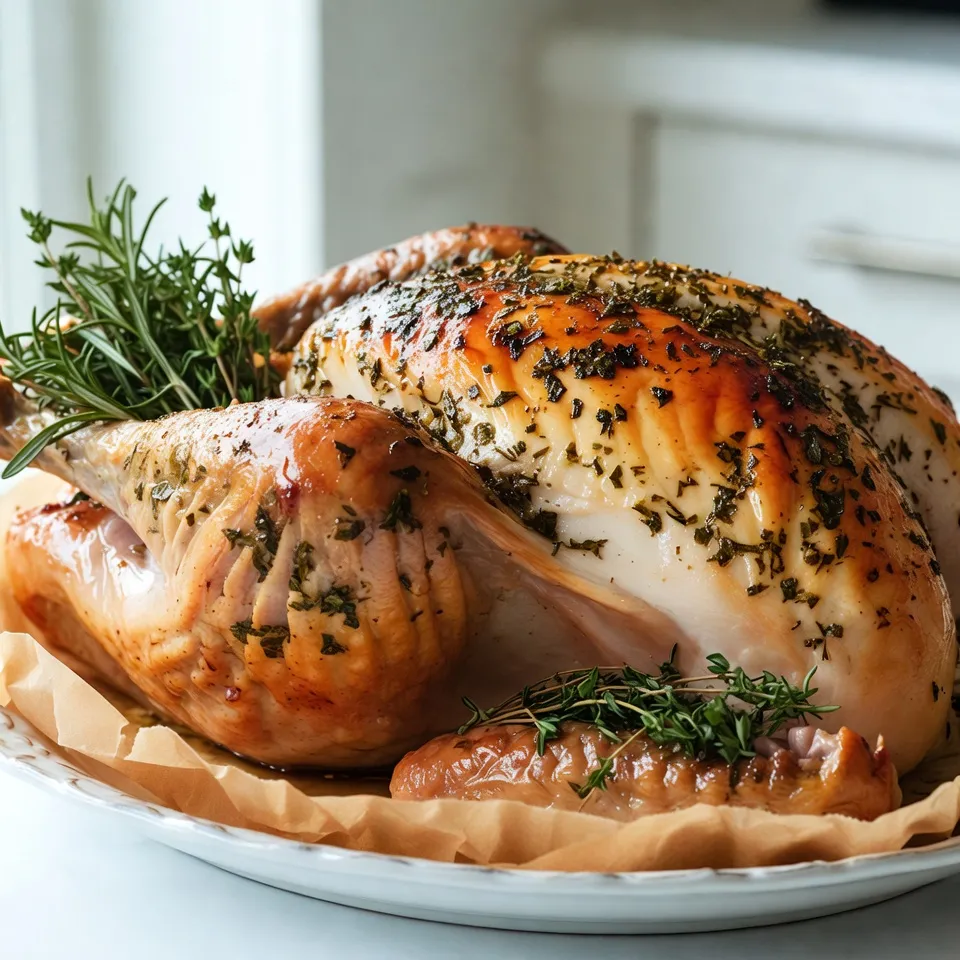
Looking to impress at your next gathering? My Garlic Herb Butter Roasted Turkey is your go-to dish for a flavorful and juicy centerpiece. With just a few fresh ingredients and simple steps, you can create a turkey that delights everyone at the table. Say goodbye to dry, bland turkey and embrace the rich taste of garlic and herbs. Get ready to elevate your cooking game and leave your guests raving!
Why I Love This Recipe
- Flavorful Herb Infusion: The combination of garlic and fresh herbs creates a delicious flavor profile that elevates the turkey, making it the star of any feast.
- Moist and Tender Meat: The herb butter not only adds flavor but also keeps the turkey moist during roasting, resulting in tender, juicy slices.
- Perfect for Gatherings: This recipe yields enough servings to feed a crowd, making it ideal for Thanksgiving or family gatherings.
- Simple Preparation: With straightforward steps and minimal ingredients, this recipe is easy to follow, even for novice cooks.
Ingredients
Main Ingredients
– 1 whole turkey (12-14 lbs)
– 1 cup unsalted butter
– 1 head of garlic, minced
Fresh Herbs
– Fresh rosemary
– Fresh thyme
– Fresh sage
Additional Ingredients
– 1 tablespoon lemon zest
– 1 tablespoon salt
– 1 teaspoon black pepper
– 4 cups low-sodium chicken broth
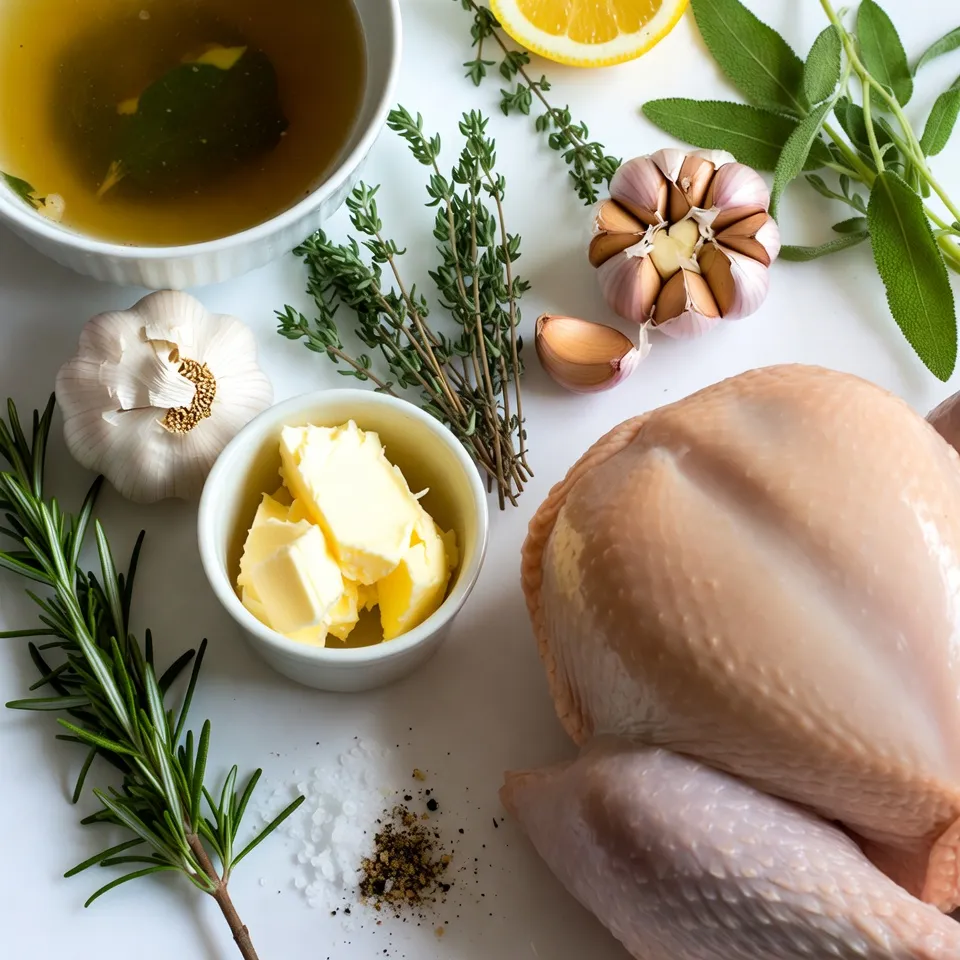
When making garlic herb butter roasted turkey, you need fresh ingredients for the best taste. The main star is a whole turkey, weighing between 12 to 14 pounds. A good size for family meals! Be sure to use unsalted butter; it blends well with the herbs and adds rich flavor.
Minced garlic is a must. A whole head gives the turkey a strong, warm taste. Fresh herbs are your next step. I love using rosemary, thyme, and sage because they work well together. They add a fresh and earthy aroma to the dish.
For a touch of brightness, you’ll need lemon zest. This gives a little zing to the flavors. Salt and black pepper are crucial for seasoning. They help enhance the taste of your turkey. Lastly, low-sodium chicken broth keeps your turkey moist while it roasts.
Gather these ingredients, and you’re ready to create a savory and juicy turkey that everyone will love!
Step-by-Step Instructions
Preparing the Oven and Ingredients
– Preheat the oven to 325°F (165°C).
– In a mixing bowl, combine:
– 1 cup unsalted butter, softened
– 1 head of garlic, minced
– 2 tablespoons fresh rosemary, chopped
– 2 tablespoons fresh thyme, chopped
– 2 tablespoons fresh sage, chopped
– 1 tablespoon lemon zest
– 1 tablespoon salt
– 1 teaspoon black pepper
Mix until smooth. This herb butter adds rich flavor.
Seasoning the Turkey
– Pat the turkey dry with paper towels. This helps the skin crisp.
– Gently loosen the skin on the turkey. Use your fingers to create space.
– Take some herb butter and rub it under the skin. This ensures flavor inside.
– Spread the rest of the butter all over the outer skin. This gives a nice crust.
Roasting Process
– Stuff the turkey with fresh herbs. You can also add lemon halves or onion quarters.
– Place the turkey on a rack in a large roasting pan.
– Pour 4 cups of low-sodium chicken broth into the pan. This keeps the turkey moist.
– Cover the turkey loosely with aluminum foil. This prevents it from browning too much.
– Roast for about 2.5 to 3.5 hours. Check that the internal temperature reaches 165°F (75°C) in the thick parts.
– Remove the foil in the last hour for a golden skin.
– Baste the turkey with pan juices every 30 minutes. This helps keep it juicy.
Tips & Tricks
Ensuring Moisture and Flavor
Basting your turkey is key for moisture. Every 30 minutes, use the pan juices to baste the turkey. This keeps the meat juicy and adds flavor. Using broth in the pan also helps. The broth steams the turkey and keeps it from drying out. It’s a simple way to ensure a tasty turkey.
Achieving Golden-Brown Skin
To get that nice golden-brown skin, cover the turkey with aluminum foil at first. This stops it from browning too soon. Remove the foil during the last hour of roasting. This lets the skin crisp up beautifully. The result will be a turkey that looks and tastes amazing.
Resting and Carving
Let the turkey rest after roasting. A good rule is to let it rest for 20 to 30 minutes. This helps the juices settle, making each slice juicy. When you carve, use a sharp knife. Start with the legs, then move to the breast. Carving slowly helps keep the meat together and looking nice.
Pro Tips
- Resting is Key: Allow the turkey to rest after roasting. This helps the juices redistribute, ensuring each slice is moist and flavorful.
- Use a Meat Thermometer: Invest in a good meat thermometer to accurately check the turkey’s internal temperature. Aim for 165°F (75°C) in the thickest part of the breast and thighs.
- Save the Drippings: Don’t discard the pan drippings! They are perfect for making gravy. Strain them and mix with flour or cornstarch for a delicious sauce.
- Experiment with Flavors: Feel free to customize the herb butter by adding other ingredients like orange zest, garlic powder, or even a splash of white wine for a unique twist.
Variations
Different Herb Combinations
You can mix and match herbs to suit your taste. Instead of rosemary, thyme, and sage, try using dill, parsley, or tarragon. Each herb brings its own unique flavor to the turkey. Adding spices like paprika or cayenne can also enhance the taste. A pinch of paprika adds warmth, while cayenne brings a slight kick. Experiment with these options to create your perfect herb blend.
Alternative Stuffing Options
Stuffing the turkey can change its flavor profile a lot. Instead of just fresh herbs, consider adding citrus fruits like oranges or lemons. This will give the turkey a bright and fresh flavor. Onions also work great for added depth. You can even throw in garlic cloves for a more intense taste. These aromatics can transform the turkey into something special.
Cooking Methods
Roasting is popular, but there are other fun ways to cook turkey. Deep-frying gives you a crispy skin and moist meat. It cooks faster than roasting, too. Just be sure to use a fryer outdoors for safety. Smoking turkey adds a unique flavor that is hard to beat. The slow cooking process makes the meat tender and juicy. Each method offers a distinct taste and texture that you can try.
Storage Info
Storing Leftovers
After enjoying your Garlic Herb Butter Roasted Turkey, you may have leftovers. To keep them fresh, cool the turkey quickly. Cut it into smaller pieces. This helps it cool faster and stay safe. Place the turkey in airtight containers. Use glass or plastic containers with tight lids. These containers prevent air from getting in and causing spoilage. Always label your containers with the date. This helps you keep track of how long they have been stored.
Reheating Tips
When you’re ready to eat your leftovers, reheating is key. The best way to reheat turkey is in the oven. Preheat your oven to 325°F (165°C). Place the turkey pieces in a baking dish. Add a splash of broth to keep them moist. Cover the dish with aluminum foil. This helps trap steam. Heat for about 20-30 minutes or until warm. To avoid dryness, check the turkey often. Remove the foil for the last few minutes to crisp the skin.
Freezing Turkey
If you want to save turkey for later, freezing is a great option. First, let the turkey cool completely. Then, wrap each piece tightly in plastic wrap. After that, place them in freezer bags. Squeeze out as much air as possible. This prevents freezer burn. For best quality, use the turkey within three months. When you’re ready to use it, thaw the turkey in the fridge overnight. This keeps it safe and ready to heat.
FAQs
How long to cook a turkey per pound?
You should cook a turkey for about 13 to 15 minutes per pound. For a 12-14 lbs turkey, this means 2.5 to 3.5 hours. Always check the turkey’s weight. This will guide your cooking time.
What temperature should the turkey be cooked to?
The turkey must reach an internal temperature of 165°F (75°C). Check the thickest part of the breast and thighs. Use a meat thermometer for accuracy. This ensures the turkey is safe to eat and juicy.
Can I prepare the turkey in advance?
Yes, you can prep your turkey a day early. Rub the herb butter on the turkey and store it in the fridge. This allows the flavors to blend well. Make sure to cover it tightly to keep it fresh.
In this blog post, we explored how to prepare a delicious turkey. We covered the essential ingredients, step-by-step roasting instructions, and some helpful tips for moisture and flavor. Don’t forget to try different herb blends or cooking methods to add your twist. Knowing how to store and reheat leftovers ensures you enjoy your turkey for days. By following these guidelines, you can create a meal that delights everyone at your table. Happy cookin