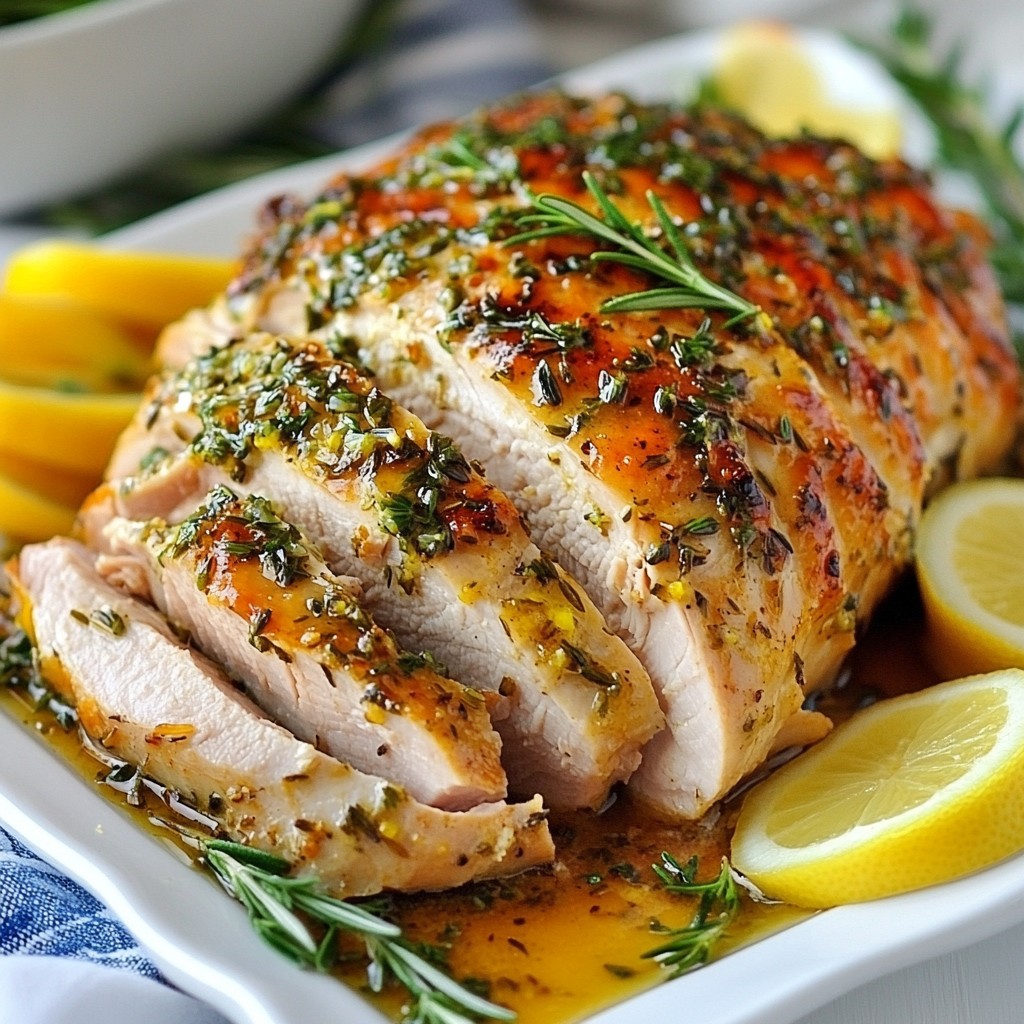
Looking to impress your guests with a tender, juicy turkey? In this guide, I’ll share my foolproof recipe for Garlic Herb Roasted Turkey Breast that's bursting with flavor. With simple ingredients like garlic, fresh herbs, and a few seasoning tricks, you can elevate your turkey game to the next level. Join me as I break down the steps, tips, and variations to make your dinner unforgettable!
Why I Love This Recipe
- Flavorful Herb Blend: The combination of garlic, rosemary, and thyme creates a fragrant and savory taste that elevates the turkey breast to a whole new level.
- Moist and Juicy: Using chicken broth in the roasting pan ensures that the turkey remains moist and flavorful throughout the cooking process.
- Simple Preparation: This recipe is straightforward and requires minimal effort, making it perfect for both novice and experienced cooks.
- Perfect for Any Occasion: Whether it’s a holiday feast or a weeknight dinner, this turkey breast is a versatile dish that will impress your guests.
Ingredients
Main Ingredients for Garlic Herb Roasted Turkey Breast
- 1 boneless turkey breast (about 3-4 pounds)
- 4 cloves garlic, minced
- 2 tablespoons fresh rosemary, chopped
- 2 tablespoons fresh thyme, chopped
Seasoning & Flavor Enhancers
- 1 tablespoon olive oil
- 1 tablespoon unsalted butter, softened
- 1 teaspoon salt
- 1/2 teaspoon black pepper
- 1/2 teaspoon paprika
Optional Ingredients
- 1 cup low-sodium chicken broth for moisture
- 1 teaspoon lemon zest for added brightness
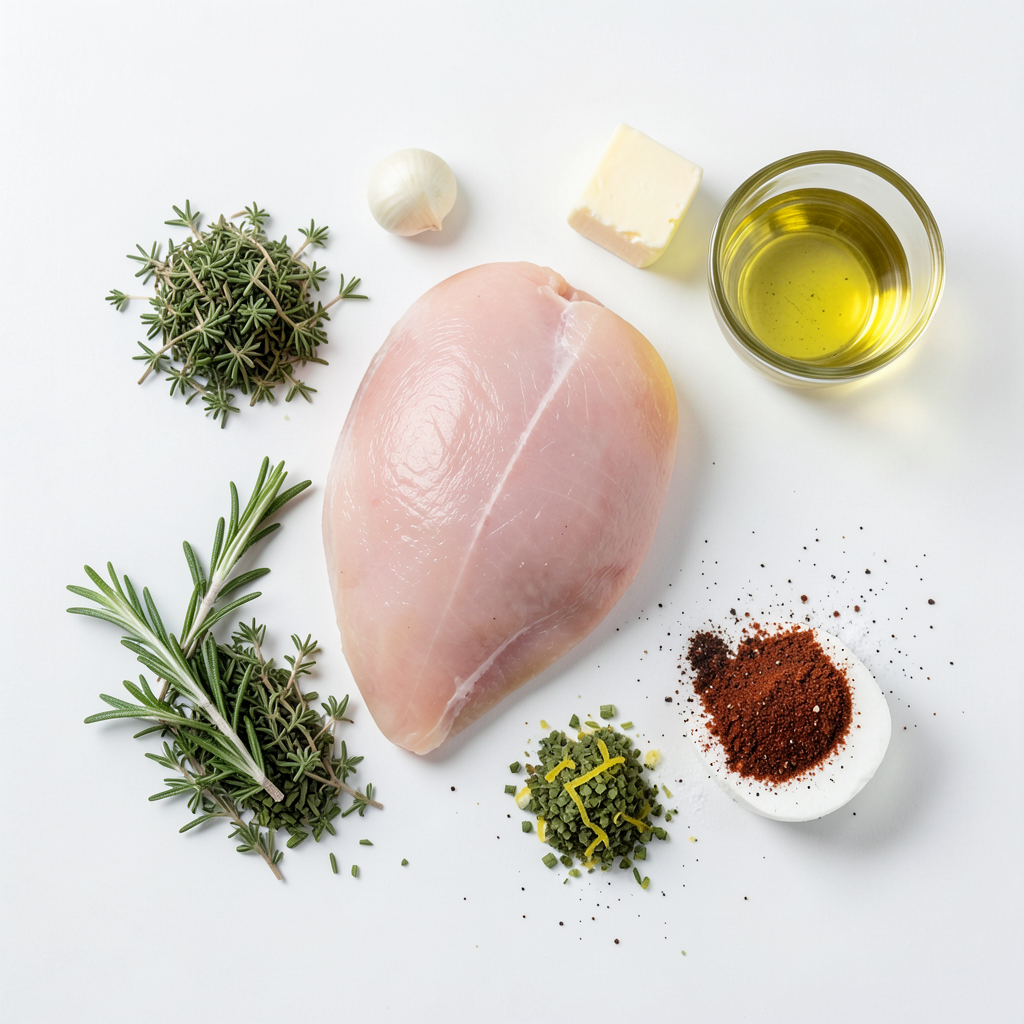
To start, the key to a juicy turkey breast is the right ingredients. The boneless turkey breast, about 3 to 4 pounds, serves as the main star. Fresh garlic, rosemary, and thyme bring bold flavors. They create a fragrant mix that will soak into the meat.
Next, we have our seasoning and flavor enhancers. Olive oil and softened butter help the herbs stick. Salt, black pepper, and paprika add depth and a touch of spice. Each enhances the turkey's natural taste.
You can also add optional ingredients for even more flavor. Chicken broth keeps the turkey moist while it roasts. A little lemon zest brightens the dish with a fresh note. These extras make your turkey breast not just tasty but also fun to eat.
Step-by-Step Instructions
Preparation Steps
1. Preheat the oven
Start by setting your oven to 375°F (190°C). This warm temperature helps the turkey cook evenly.
2. Create the herb paste
In a small bowl, mix together:
- 4 cloves garlic, minced
- 2 tablespoons fresh rosemary, chopped
- 2 tablespoons fresh thyme, chopped
- 1 tablespoon olive oil
- 1 tablespoon unsalted butter, softened
- 1 teaspoon lemon zest
- 1 teaspoon salt
- 1/2 teaspoon black pepper
- 1/2 teaspoon paprika
Stir well until the paste becomes fragrant and smooth.
Cooking the Turkey Breast
1. Prepare the turkey breast
Take your boneless turkey breast (about 3-4 pounds) and pat it dry with paper towels. Place it in a roasting pan.
2. Rub the herb paste under the skin
Carefully slide your fingers between the skin and the meat. Make a pocket without tearing the skin. Then, rub the herb paste under the skin and on the surface of the turkey. This step adds great flavor.
Roasting Instructions
1. Baste and time the roasting
Pour 1 cup of low-sodium chicken broth into the bottom of the pan. Roast the turkey breast for 1 hour to 1 hour 15 minutes. Baste it with broth every 20-30 minutes. This keeps it moist and tasty.
2. Check for doneness
Use a meat thermometer to check the internal temperature. It should reach 165°F (74°C). Once done, take the turkey out and cover it loosely with aluminum foil. Let it rest for 15 minutes before slicing. This helps keep the juices inside.
Tips & Tricks
Ensuring Moisture and Flavor
Basting is key to juicy turkey. Baste the turkey every 20-30 minutes. Use the broth in the pan. This keeps the meat moist and adds flavor.
Keep an eye on the oven temp. Set it to 375°F (190°C). This is the sweet spot for even cooking. If the oven is too hot, the outside cooks too fast. If it’s too cool, the turkey can dry out.
Perfecting the Herb Paste
Mix the herb paste well. Use 4 cloves of garlic, fresh rosemary, thyme, olive oil, and butter. This combo gives a rich flavor.
When applying it, slide your fingers under the skin of the turkey. Make sure to coat the meat evenly. If you want more flavor, add extra herbs or more garlic. Adjust to your taste.
Resting and Slicing the Turkey
Resting the turkey is a must. After cooking, cover it with foil and let it sit for 15 minutes. This helps the juices settle and makes each slice tasty.
When slicing, use a sharp knife. Cut against the grain for tender pieces. Arrange the slices on a platter. Add fresh herbs and lemon for a bright touch. This makes your dish look great and inviting.
Pro Tips
- Resting Period: Allow the turkey to rest after roasting; this helps the juices redistribute for a moister slice.
- Flavor Variations: Experiment with different herbs like sage or oregano to customize the flavor profile to your liking.
- Gravy Enhancement: Use the pan drippings and broth to make a delicious gravy that pairs perfectly with the turkey.
- Leftover Magic: Use any leftover turkey in sandwiches, salads, or soups for quick and tasty meals throughout the week.
Variations
Flavor Variations
You can change the herbs in this recipe. Swap rosemary and thyme for other fresh herbs. Oregano and sage work well too. You might even try a mix of basil and parsley for a different taste.
If you want a spicy kick, use red pepper flakes in the herb paste. You can add cayenne pepper to the mix for some heat. A mix of Italian seasoning can also add a nice flavor twist.
Cooking Methods
You don’t have to roast the turkey breast in the oven. You can use a slow cooker instead. This method allows the turkey to cook low and slow, making it very tender. Just follow the same seasoning steps.
Grilling or smoking the turkey is another great option. It adds a smoky flavor that many love. Be sure to keep the grill at a steady temperature for best results.
Serving Suggestions
This turkey pairs well with many sides. Try serving it with mashed potatoes or roasted vegetables. A fresh salad can add a nice crunch.
For a fun twist, serve the turkey in a sandwich. Use crusty bread and add your favorite toppings. You can also slice it thin and serve it on a platter with dips.
Storage Info
Storing Leftovers
After you enjoy your garlic herb roasted turkey breast, store any leftovers properly. First, let the turkey cool down. Then, slice it into pieces for easier storage.
- Place the turkey in an airtight container.
- Store in the fridge for up to four days.
- For longer storage, wrap the turkey tightly in plastic wrap and place it in a freezer bag.
- You can freeze turkey for up to three months.
Reheating Instructions
To enjoy your leftover turkey, you want to keep it juicy and tasty. Here are the best ways to reheat it:
- Oven Method: Preheat your oven to 325°F (160°C). Place turkey slices in a baking dish. Add a splash of chicken broth and cover with foil. Heat for about 20-25 minutes.
- Microwave Method: Place turkey on a microwave-safe plate. Add a bit of broth or water. Cover with a microwave-safe lid. Heat in short bursts, checking often to avoid drying it out.
Get creative with leftovers! You can chop the turkey and add it to salads, soups, or sandwiches. Use it as a topping on pizzas or mix it into pasta. The options are endless!
FAQs
Common Questions
How long to cook a turkey breast per pound? You should cook a turkey breast for about 20 to 25 minutes per pound. This means if your turkey breast weighs 3 pounds, it will take around 1 hour to 1 hour and 15 minutes. Always check for doneness with a meat thermometer.
Can I prepare the herb paste in advance? Yes, you can prepare the herb paste a day ahead. Just store it in the fridge in an airtight container. This helps the flavors blend well before you use it.
Cooking Temperature and Safety
What is the safe internal temperature for turkey? The safe internal temperature for turkey is 165°F (74°C). This is crucial to ensure it is safe to eat. Always use a meat thermometer to check the thickest part of the breast.
How to tell if the turkey is cooked correctly? You can tell if the turkey is cooked by using a meat thermometer. When it reads 165°F, it is done. Also, the juices should run clear, not pink.
Alternative Ingredients
Can I use dried herbs instead of fresh? Yes, you can use dried herbs. Use one-third of the amount since dried herbs are stronger in flavor. For example, if the recipe calls for 2 tablespoons of fresh rosemary, use about 2 teaspoons of dried rosemary.
What if I don’t have chicken broth on hand? If you don’t have chicken broth, you can use vegetable broth or water. Both options will keep the turkey moist while it cooks. For extra flavor, add a little salt or seasoning to the liquid.
You can make a great garlic herb roasted turkey breast with simple steps. We covered the main ingredients, including turkey breast and herbs. I shared tips for moisture and flavor, plus variations for your taste. Knowing how to store and reheat leftovers adds to the meal's value.
Stay confident in your turkey cooking skills. With practice, you’ll serve a dish that impresses everyone. Enjoy creating your perfect turkey that brings joy to your table!