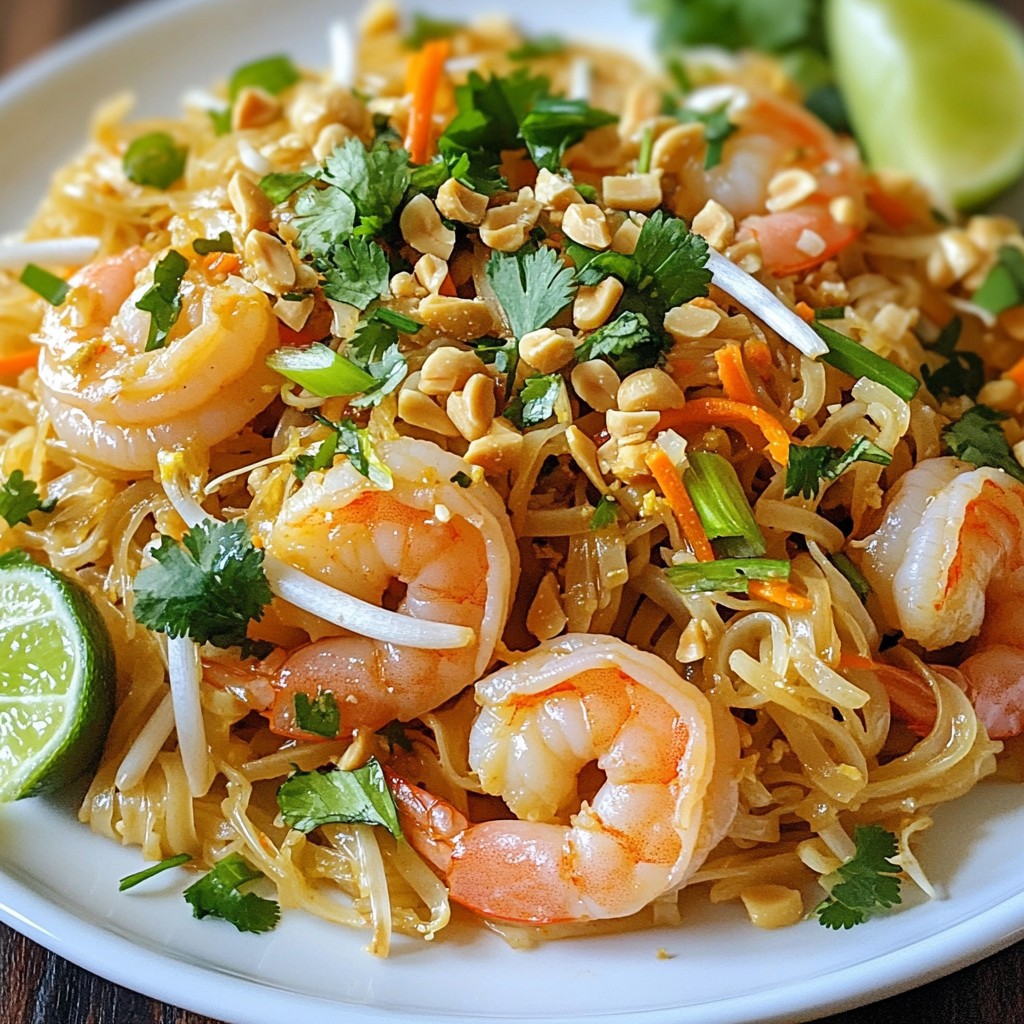
Do you crave a dish that delights your taste buds without spending hours in the kitchen? I've got just the recipe for you: Savory Shrimp Pad Thai. This quick and easy meal features tender shrimp, fresh veggies, and a delicious sauce, all tossed together with rice noodles. Keep reading to discover the simple steps and tips to make a mouthwatering Shrimp Pad Thai right at home. Your dinner plans just got more exciting!
Why I Love This Recipe
- Quick and Easy: This Shrimp Pad Thai comes together in just 40 minutes, making it a perfect weeknight meal that doesn't compromise on flavor.
- Flavor Packed: The combination of tamarind, fish sauce, and peanuts creates a delightful balance of sweet, salty, and tangy flavors that will satisfy your taste buds.
- Customizable: This recipe allows you to easily swap shrimp for chicken or tofu, and you can add more veggies to suit your preferences.
- Authentic Experience: With traditional ingredients and techniques, this dish brings the authentic taste of Thailand right to your kitchen.
Ingredients
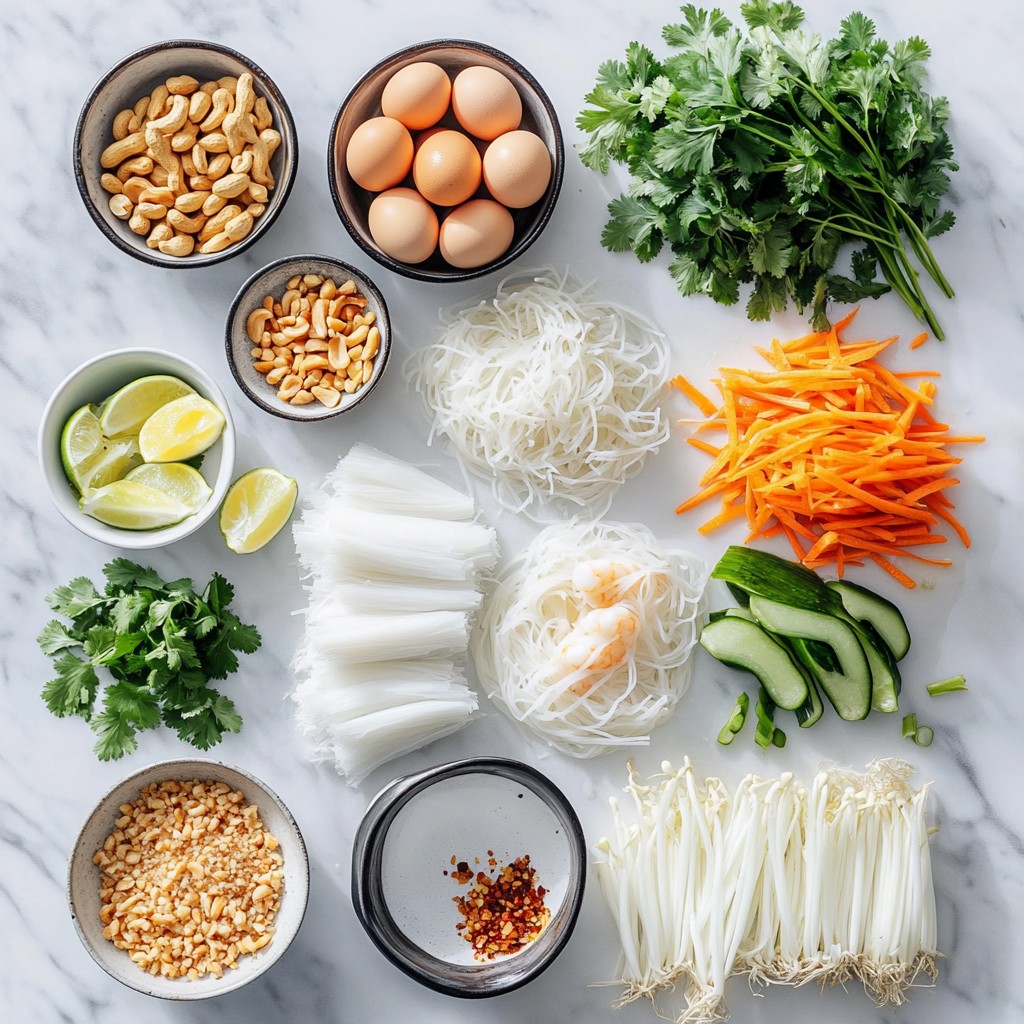
List of Ingredients for Shrimp Pad Thai
- 8 oz rice noodles
- 1 lb shrimp, peeled and deveined
- 3 tablespoons vegetable oil
- 2 cloves garlic, minced
- 2 eggs, lightly beaten
- 1 cup bean sprouts
- 1 carrot, julienned
- 3 green onions, sliced
- 1/4 cup roasted peanuts, chopped
- 3 tablespoons fish sauce (or soy sauce for a vegetarian option)
- 2 tablespoons tamarind paste
- 1 tablespoon sugar
- Lime wedges for serving
- Fresh cilantro for garnish
Key Ingredients and Their Roles
The rice noodles form the base of the dish. They soak up all the flavors. Shrimp adds protein and a sweet taste. The vegetable oil helps to cook all the ingredients. Garlic gives a nice aroma and depth to the dish. Eggs add richness and texture. Bean sprouts and carrots provide crunch and freshness. Green onions add a mild onion flavor. Peanuts give a nutty taste and a nice crunch. Fish sauce (or soy sauce) adds saltiness and umami. Tamarind paste gives that classic tangy flavor. Sugar balances out the flavors and enhances sweetness.
Suggested Substitutions
If you can't find rice noodles, use any flat noodles you like. Chicken or tofu can replace shrimp if you want a different protein. For a vegetarian dish, opt for soy sauce instead of fish sauce. You can use sunflower oil instead of vegetable oil. If you want a bit of heat, add some chili flakes or fresh chili. For a twist, consider adding bell peppers or bok choy.
Step-by-Step Instructions
Preparing the Noodles
Start by soaking the rice noodles in warm water. Let them sit for about 20 to 30 minutes. This helps soften them. Once they are soft, drain the noodles and set them aside.
Making the Sauce
In a small bowl, mix the fish sauce or soy sauce, tamarind paste, and sugar. Stir until the sugar dissolves and the sauce blends well. This sauce will give your Pad Thai its famous flavor.
Cooking the Shrimp and Eggs
In a large skillet or wok, heat two tablespoons of vegetable oil over medium-high heat. Add minced garlic and sauté for about 30 seconds. This brings out its aroma. Next, add the shrimp. Cook them for about 3 to 4 minutes until they turn pink and opaque. Remove the shrimp and set them aside. In the same skillet, add a tablespoon of oil. Pour in the beaten eggs and scramble them until fully cooked.
Combining the Ingredients
Now, add the softened rice noodles to the skillet. Add the cooked shrimp, bean sprouts, and julienned carrots. Pour the sauce over everything and toss gently. Cook this mixture for an additional 2 to 3 minutes until heated through.
Serving Suggestions
Remove the skillet from heat. Plate your Shrimp Pad Thai and garnish with green onions and half of the chopped peanuts. Top with the remaining peanuts, fresh cilantro, and lime wedges. Squeeze lime juice over your dish for a bright finish. Enjoy your meal!
Tips & Tricks
Essential Tips for Flavorful Shrimp Pad Thai
To make your Shrimp Pad Thai shine, focus on fresh ingredients. Use the best shrimp you can find. They should be firm and smell clean. Fresh garlic adds a nice kick. When cooking, ensure your skillet is hot. This helps the shrimp cook quickly. A quick cook keeps the shrimp juicy. Don’t forget the tamarind paste; it brings a unique flavor. Adjust the fish sauce to your taste. It adds a savory depth that is key.
Common Mistakes to Avoid
One common mistake is overcooking the noodles. Soak them just until soft. If they sit too long, they get mushy. Another mistake is adding too much sauce at once. Mix in the sauce gradually to control the flavor. Be careful with the heat when cooking the shrimp. If it’s too low, they won’t sear properly. Lastly, don’t skip the garnishes. Peanuts and lime elevate the dish.
How to Achieve the Perfect Texture
For great texture, ensure the noodles are just right. They should be soft but not soggy. Add them to the pan when the other ingredients are hot. This helps them absorb flavors. When you scramble the eggs, keep them fluffy. Stir gently to avoid overcooking them. Use fresh bean sprouts for crunch. They add a nice contrast to the soft noodles. Lastly, serve the Pad Thai right away. This keeps it warm and vibrant.
Pro Tips
- Prep Your Ingredients: Before starting to cook, ensure all your ingredients are prepped and ready to go. This will help streamline the cooking process and prevent any last-minute rush.
- Control the Heat: When cooking the shrimp, make sure the skillet is hot enough to quickly sear the shrimp, giving it a nice flavor without overcooking.
- Customize Your Sauce: Feel free to adjust the balance of fish sauce, tamarind paste, and sugar according to your taste. A little more tamarind can add tanginess, while extra sugar can enhance sweetness.
- Add Fresh Herbs: For an even fresher taste, consider adding Thai basil or mint along with the cilantro for a burst of flavor.
Variations
Vegetarian and Vegan Alternatives
You can easily make Shrimp Pad Thai vegetarian or vegan. Just swap the shrimp for tofu or tempeh. Use soy sauce instead of fish sauce for a great flavor. You can also add more veggies, like bell peppers or mushrooms. These options keep the dish tasty and satisfying.
Different Protein Options
If you want to change the protein, you have options. Chicken or beef works well in Pad Thai. Just slice the meat thinly and cook it until done. You can even try using fish or scallops for a seafood twist. Each protein brings a unique flavor to the dish.
Seasonal Vegetable Add-ins
Adding seasonal vegetables can enhance your Pad Thai. In spring, try adding asparagus or snap peas. In summer, zucchini or bell peppers are great. In fall, use butternut squash or kale. These veggies not only add color but also boost nutrients. Mix and match to keep it fresh and exciting!
Storage Info
Best Practices for Storing Leftovers
To keep your Shrimp Pad Thai fresh, store it in an airtight container. This helps prevent moisture loss and keeps flavors intact. Let it cool to room temperature before sealing. Place it in the fridge if you plan to eat it within three days. If you need to store it longer, freezing is a good option.
Reheating Instructions
Reheat your Pad Thai on the stove or in the microwave. For the stove, heat a pan over medium heat. Add a splash of water or oil to prevent sticking. Stir the Pad Thai until it’s heated through, about 5 minutes. In the microwave, place it in a bowl and cover it with a damp paper towel. Heat in 30-second intervals, stirring in between, until hot.
Freezing Pad Thai: What to Know
You can freeze Shrimp Pad Thai, but it's best to do this before adding the shrimp. Cook the noodles and sauce, then cool them before packing in freezer-safe bags. When you're ready to eat, thaw overnight in the fridge. Then, stir in fresh shrimp and heat as described above. This keeps the shrimp from becoming rubbery.
FAQs
What is the origin of Pad Thai?
Pad Thai comes from Thailand. It started in the 1930s. A Thai leader wanted to boost national pride. He promoted a dish that used rice noodles, fish sauce, and shrimp. Today, it is a popular street food.
Can I use a different type of noodle?
Yes, you can use other noodles. Rice noodles are the best choice for Pad Thai. If you want a change, try egg noodles or whole wheat noodles. Just remember that cooking times may vary.
How can I make Shrimp Pad Thai spicier?
To spice up your Shrimp Pad Thai, add chili flakes or fresh chili peppers. You can also use Sriracha sauce or chili paste. Start with a little and taste as you go. Adjust the heat to your liking.
Is Pad Thai gluten-free?
Pad Thai can be gluten-free if you use rice noodles. Fish sauce is usually gluten-free, but check the label. If you use soy sauce, look for a gluten-free version. Always read ingredient labels to be safe.
How long does Shrimp Pad Thai last in the fridge?
Shrimp Pad Thai lasts about 3 days in the fridge. Store it in an airtight container. When you reheat it, add a splash of water or sauce. This helps keep it moist and tasty.
Shrimp Pad Thai is a tasty dish with many flavors. We covered the key ingredients that make it shine and gave smart tips for cooking it just right. You learned how to prepare, cook, and serve it. We also shared some fun variations and storage tips.
Now that you know all this, it’s time to try making it yourself. Enjoy crafting your own Shrimp Pad Thai and share it with friends!