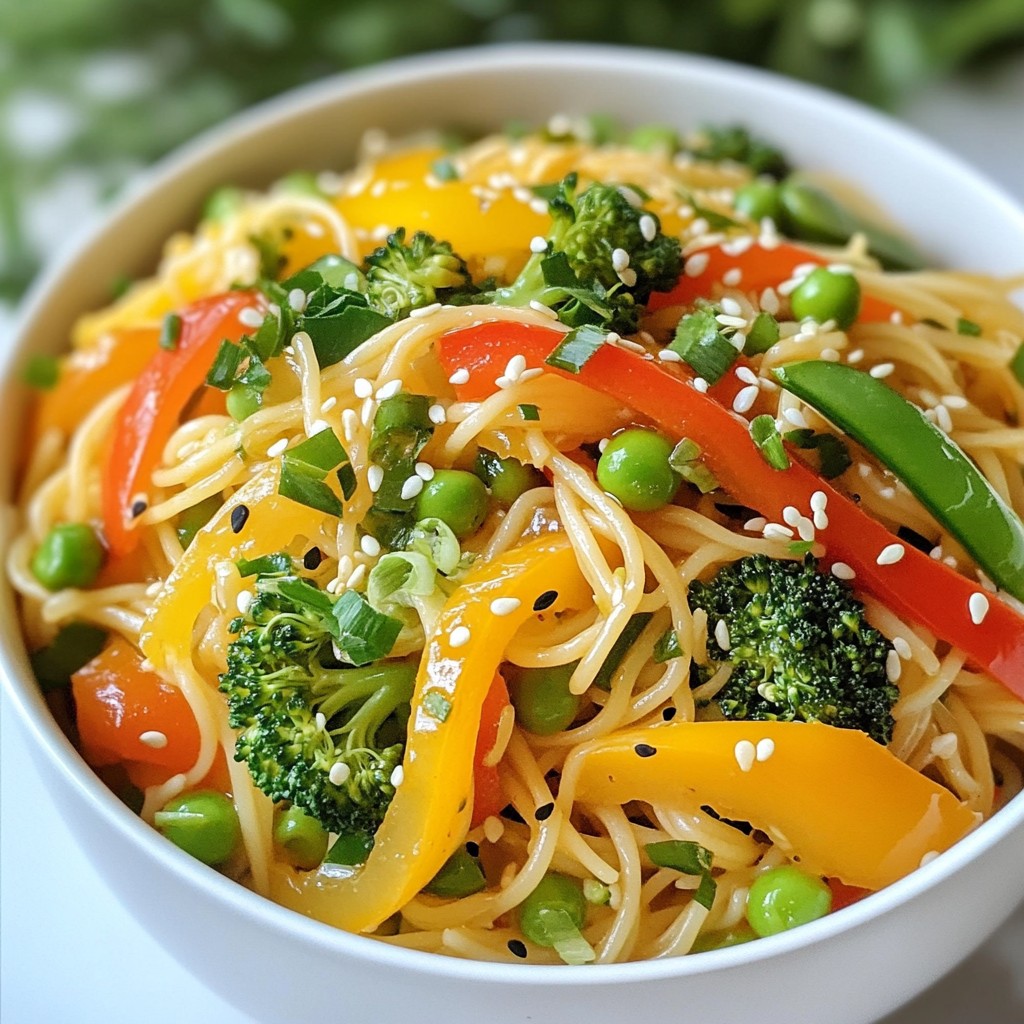
Are you ready to elevate your dinner game? This Sesame Ginger Noodle Stir Fry is a colorful and tasty dish that everyone will love. Packed with fresh veggies and bold flavors, it’s quick to prepare and perfect for any night of the week. I’ll guide you through the simple steps to create this delicious meal that bursts with flavor. Let’s dive in and cook up some excitement in the kitchen!
Why I Love This Recipe
- Quick and Easy: This stir fry can be made in just 20 minutes, making it perfect for a busy weeknight dinner.
- Colorful and Nutritious: Loaded with vibrant vegetables, this dish not only looks great but also packs a nutrient punch.
- Customizable: You can easily swap in your favorite veggies or proteins, making it versatile for any taste.
- Delicious Flavor: The combination of sesame oil, ginger, and garlic creates a mouthwatering flavor that’s hard to resist.
Ingredients
Main Ingredients
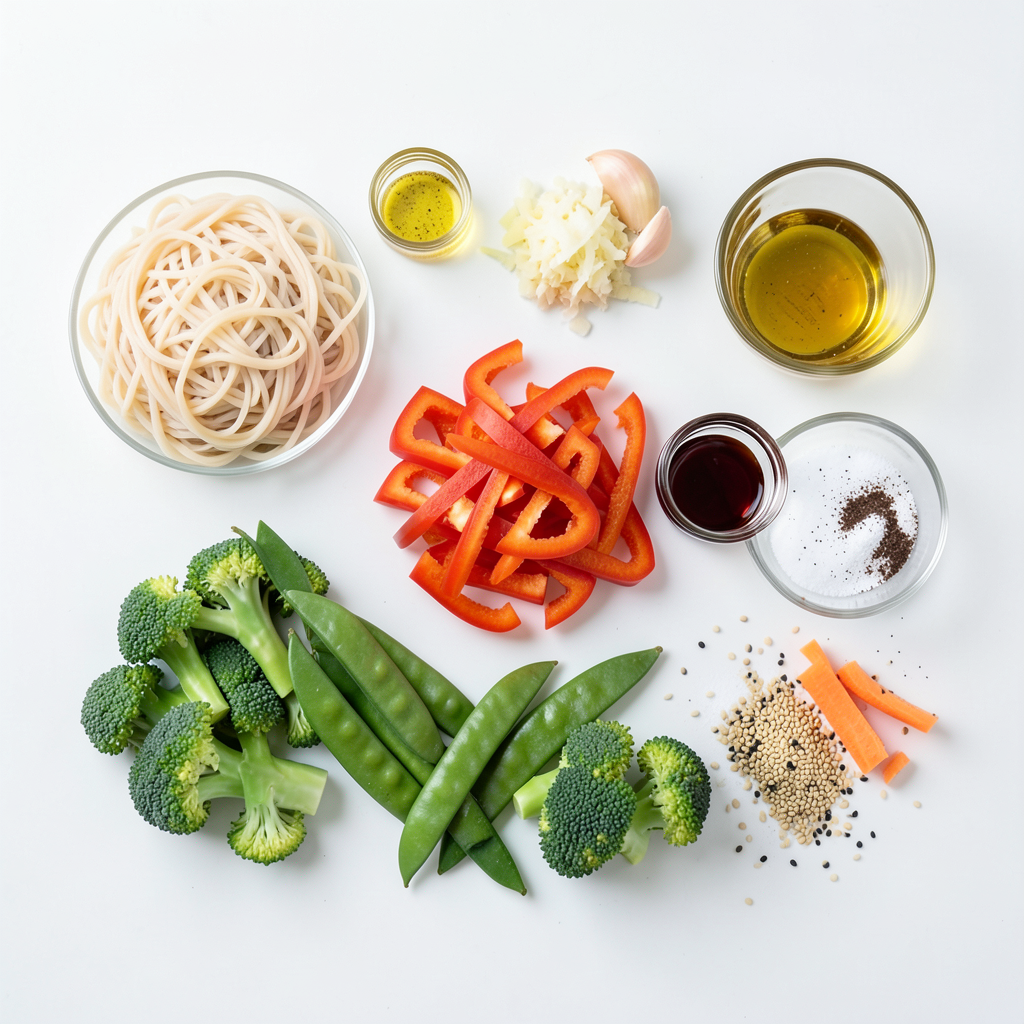
- 8 oz rice noodles
- 2 tablespoons sesame oil
- 1 tablespoon freshly grated ginger
- 3 cloves garlic, minced
For this dish, I love using rice noodles. They are light and soak up flavors well. Sesame oil adds a rich, nutty taste. Fresh ginger and garlic bring a warm, spicy kick.
Vegetables
- 1 cup bell peppers (mixed colors), sliced
- 1 cup snap peas, trimmed
- 1 cup broccoli florets
- 2 carrots, julienned
I recommend colorful bell peppers for a nice crunch. Snap peas add freshness and sweetness. Broccoli gives a hearty bite, while carrots add vibrant color and texture.
Seasoning and Garnish
- 1/4 cup low-sodium soy sauce
- 1 tablespoon honey or maple syrup
- 2 green onions, chopped
- 2 tablespoons sesame seeds
Low-sodium soy sauce keeps the dish savory without too much salt. Honey or maple syrup balances the flavors with a touch of sweetness. Finish with green onions and sesame seeds for crunch and charm.
Step-by-Step Instructions
Cooking the Noodles
First, cook the rice noodles. Follow the package directions carefully. This usually takes about 5 to 7 minutes. Once the noodles are soft, drain them. Rinse them briefly in cold water. This stops the cooking process. Set the noodles aside in a bowl.
Stir-Frying the Vegetables
Now, grab your wok or a large skillet. Heat 2 tablespoons of sesame oil over medium-high heat. Add 1 tablespoon of freshly grated ginger and 3 cloves of minced garlic. Stir these for about 30 seconds. You want the aroma to fill the kitchen. Next, toss in 1 cup of sliced bell peppers, 1 cup of snap peas, 1 cup of broccoli florets, and 2 julienned carrots. Stir-fry these for about 4 to 5 minutes. Look for bright colors and slight tenderness in the veggies.
Combining the Ingredients
Add the cooked noodles to the wok with the stir-fried veggies. In a small bowl, mix 1/4 cup of low-sodium soy sauce with 1 tablespoon of honey or maple syrup. Drizzle this sauce over the noodles and vegetables. Toss everything gently for about 2 to 3 minutes. Make sure everything is well combined and heated through. Season with salt and pepper to taste. Finally, top with chopped green onions and sesame seeds before serving. Enjoy this colorful and tasty meal!
Tips & Tricks
Cooking Tips
- To get the best stir-fry texture, cook on high heat. This keeps the veggies crisp and bright.
- Cut your vegetables into small, even pieces. This helps them cook evenly.
- Keep stirring the mix often. This prevents burning and helps everything cook well.
- To stop the noodles from sticking, rinse them under cold water after cooking. This cools them down and removes excess starch.
Flavor Enhancements
- You can add spices like red pepper flakes for a kick. This adds depth to your dish.
- Want more umami? Try adding a splash of oyster sauce or hoisin sauce.
- Adjust sweetness with more honey or maple syrup, if you like it sweeter.
- Add soy sauce little by little. Taste as you go to get the right saltiness.
Presentation Tips
- Serve your stir fry in big bowls for a cozy feel.
- Garnish with extra sesame seeds and chopped green onions for color.
- A bright plate makes the dish pop. Use white or light-colored dishes for the best look.
Pro Tips
- Prep Your Ingredients: Having all your vegetables chopped and sauces measured out before you start cooking will make the stir fry process smooth and quick.
- High Heat is Key: Cooking on high heat allows the vegetables to sear quickly, preserving their color and crunch. Keep everything moving in the pan!
- Customize Your Veggies: Feel free to substitute or add any vegetables you like or have on hand, such as zucchini, mushrooms, or bok choy for variety.
- Make it Spicy: Add some red pepper flakes or a splash of sriracha to the sauce for an extra kick if you enjoy a bit of heat in your dishes.
Variations
Protein Additions
You can add protein to this dish for extra flavor and nutrition. Tofu, chicken, or shrimp all work well.
- Tofu: Use firm tofu for a great texture. Cut it into cubes and fry it until golden. Add it to the stir fry for the last 2-3 minutes.
- Chicken: Thinly slice boneless chicken breasts. Cook them for 5-7 minutes before adding the veggies.
- Shrimp: Use peeled shrimp. Cook them for about 3-4 minutes until they turn pink.
Alternate Noodles
This stir fry is flexible with noodle types. You can switch rice noodles for other kinds too.
- Egg Noodles: These add a rich taste. Cook them as you would rice noodles.
- Whole Wheat Noodles: These offer a nutty flavor and are a bit healthier.
- Gluten-Free Options: Use rice noodles or buckwheat noodles. Both are great for gluten-free diets.
Veggie Substitutions
Feel free to change up the veggies based on the season or what you have at home.
- Seasonal Vegetables: Try zucchini, asparagus, or spinach in spring. In fall, use squash or sweet potatoes.
- Frozen versus Fresh: Frozen veggies are handy and save time. They’re often picked at peak freshness, so they can be just as tasty. Fresh veggies give a crisp texture and bright colors.
Mix and match these variations to make your Sesame Ginger Noodle Stir Fry unique!
Storage Info
Leftovers
Storing your leftovers right helps keep them fresh. First, let the stir fry cool down to room temperature. Then, place it in an airtight container. This will keep out air and moisture. You can store your stir fry in the fridge for up to three days. If you think you won’t eat it in that time, consider freezing it.
Reheating Tips
To reheat your stir fry, use a skillet or a microwave. If using a skillet, heat it over medium heat. Add a splash of water or oil to keep it moist. Stir it often to avoid burning. In the microwave, use a microwave-safe dish. Cover it with a lid or a damp paper towel to trap steam. This way, your noodles stay soft. Always check the noodles to prevent sogginess.
Freezing Instructions
Yes, you can freeze this stir fry! Just remember to cool it completely first. Then, place it in a freezer-safe container. It can last up to three months in the freezer. When you’re ready to eat, take it out and thaw it overnight in the fridge. To reheat, use the same methods as above. This keeps the flavors and texture just right.
FAQs
What type of noodles are best for stir fry?
For stir fry, you can use several types of noodles. I love rice noodles for their lightness. They soak up flavors well. Instant noodles are also quick and easy. They add a nice chew. You might try egg noodles too. They bring a rich taste. Choose what you like best.
Can I make this recipe vegan?
Yes, you can make this stir fry vegan! Swap honey with maple syrup. Use soy sauce or tamari for salt. You can add tofu for protein. It absorbs flavors nicely. Also, feel free to use other veggies. Try mushrooms or bok choy. They work great in this dish.
How do I make the stir fry spicier?
To spice up your stir fry, add chili flakes. They give heat without changing flavor. You can also use sriracha or chili paste. Mix it in with the sauce. Another idea is to add fresh sliced chilies. They add a fresh kick. Adjust the amount to your taste.
This blog post covers all you need for a great stir-fry. We explored key ingredients like rice noodles, fresh veggies, and seasonings that boost flavor. I shared step-by-step cooking instructions and helpful tips for the best texture. Plus, you learned ways to customize your dish with proteins and variations. Finally, we discussed storage and reheating, ensuring you can enjoy your meal later. Remember, stir-fry is versatile and fun. Experiment with different flavors and ingredients to make it your own!