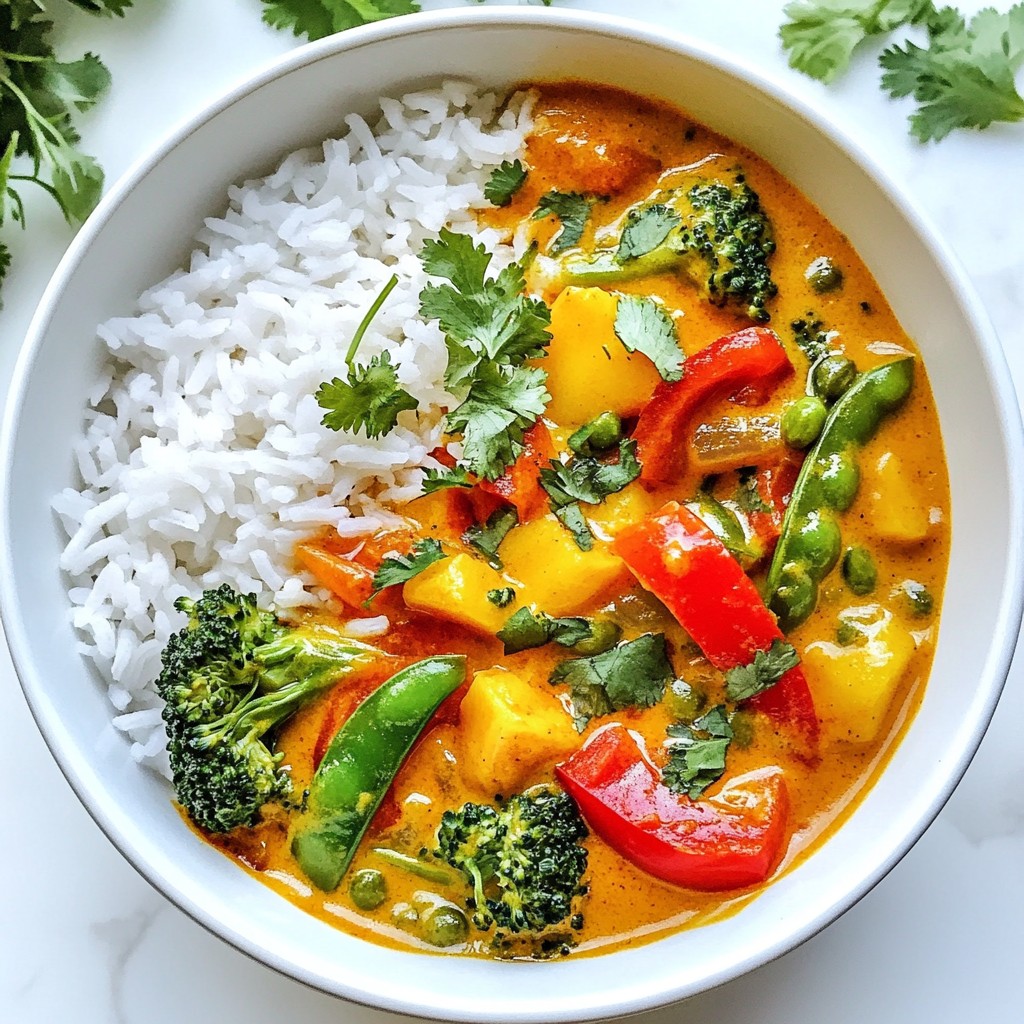
Are you ready to try a dish that bursts with flavor and is super easy to make? My Vegan Thai Peanut Curry combines rich, creamy peanut sauce with fresh veggies for a meal that's both tasty and healthy! Perfect for anyone, this recipe is simple enough for beginners and packed with options for those who want to customize. Let’s dive in and cook up something delicious together!
Why I Love This Recipe
- Delicious Flavor Combination: The rich and creamy coconut milk pairs perfectly with the spicy red curry paste, creating a mouthwatering flavor profile that's both comforting and exciting.
- Quick and Easy: This recipe comes together in just 30 minutes, making it a perfect weeknight dinner option that doesn't compromise on taste.
- Nutritious Ingredients: Packed with fresh vegetables and healthy fats from peanut butter, this curry is not only delicious but also nourishing and fulfilling.
- Customizable: You can easily modify this recipe by adding your favorite vegetables or proteins, making it versatile for any dietary preference.
Ingredients
Essential Ingredients for Vegan Thai Peanut Curry
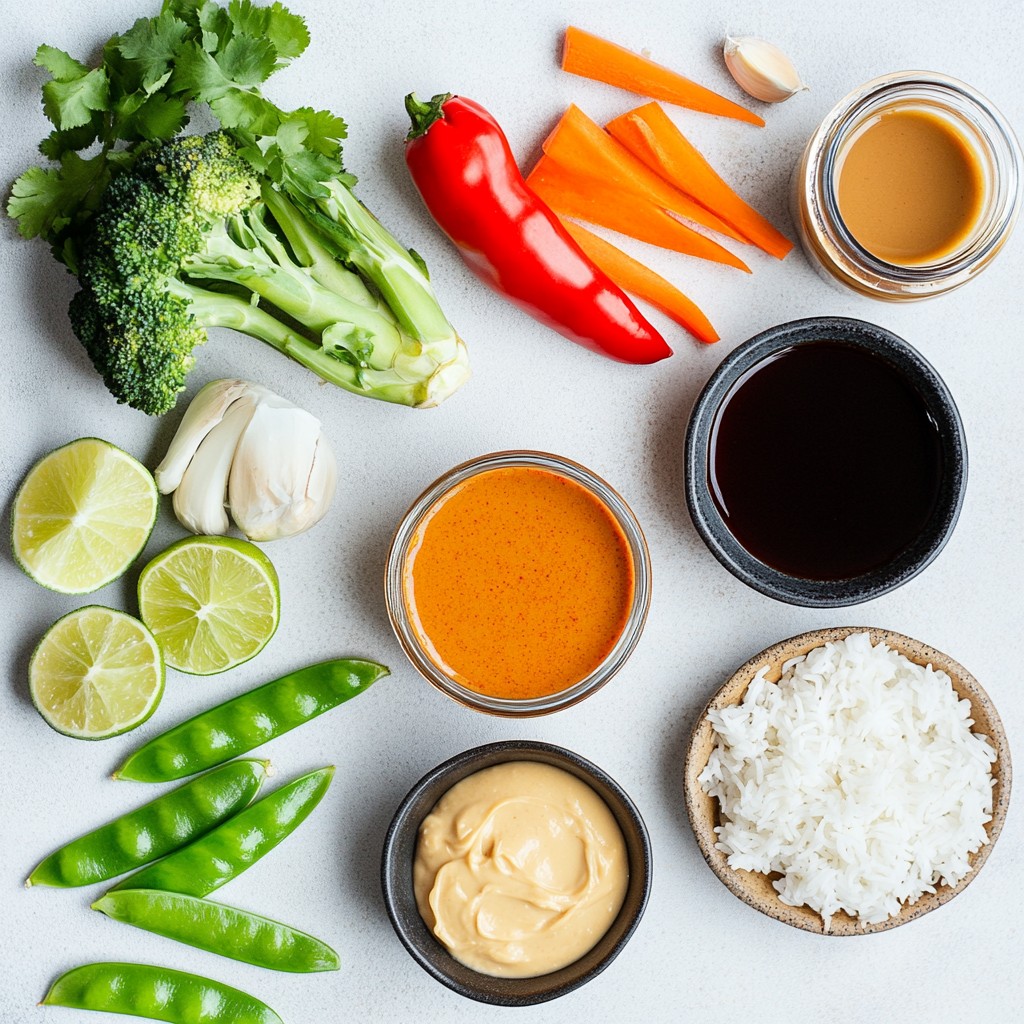
To make a tasty Vegan Thai Peanut Curry, you need:
- 1 cup coconut milk
- 1 cup vegetable broth
- 2 tablespoons peanut butter (natural)
- 2 tablespoons red curry paste
- 1 tablespoon soy sauce (or tamari for gluten-free)
- 1 tablespoon maple syrup
- 1 tablespoon fresh lime juice
- 1 medium onion, diced
- 3 cloves garlic, minced
- 1 tablespoon ginger, minced
- 1 red bell pepper, sliced
- 1 cup broccoli florets
- 1 cup snap peas
- 1 carrot, sliced
- Salt and pepper, to taste
These ingredients create a rich and creamy base. Coconut milk gives a smooth texture. The red curry paste adds warmth and spice. The peanut butter provides a nutty flavor that ties everything together.
Optional Ingredients for Enhanced Flavor
You can add extra ingredients for more depth. Consider using:
- 1 tablespoon of lime zest for brightness
- 1 tablespoon of sesame oil for a nutty touch
- A splash of rice vinegar for some tang
These add-ons can enhance the taste and make your curry even more special.
Suggested Garnishes
Garnishes can elevate your dish visually and taste-wise. Try these:
- Fresh cilantro, chopped
- Lime wedges for squeezing
- Chopped peanuts for crunch
These garnishes add fresh flavors and colors to your Vegan Thai Peanut Curry. They make it look beautiful and appetizing.
Step-by-Step Instructions
Preparing the Base Mixture
Start by heating a large pot over medium heat. Add a splash of vegetable broth to the pot. Once hot, toss in the diced onion. Sauté it for about 5 minutes until it becomes soft and translucent. Next, add the minced garlic and ginger. Cook for 1 to 2 more minutes. This step fills your kitchen with a wonderful aroma. Now, stir in the red curry paste and peanut butter. Mix them well until everything is combined. Cook this for 1 to 2 minutes until it warms through.
Cooking the Vegetables
Now, it's time to bring the curry to life! Pour in the coconut milk and vegetable broth. Make sure to stir well to combine all the flavors. Add the soy sauce, maple syrup, and fresh lime juice. Mix again to ensure everything is evenly blended. Bring the mixture to a gentle simmer. Once simmering, add the red bell pepper, broccoli, snap peas, and sliced carrot. Cook these vegetables for 5 to 7 minutes. You want them to be tender yet still bright and vibrant.
Finishing Touches and Serving Suggestions
After the vegetables are cooked, taste the curry. Adjust the seasoning with salt and pepper if needed. Serve this delicious curry over cooked jasmine rice. To add a fresh touch, garnish with chopped cilantro. It not only looks great but also adds a burst of flavor. Enjoy your Vegan Thai Peanut Curry!
Tips & Tricks
Ideal Cooking Techniques for Best Results
To make the best Vegan Thai Peanut Curry, start with the right tools. Use a large pot for even cooking. When you sauté the onion, use medium heat to avoid burning. This step helps build a strong flavor base. After adding garlic and ginger, stir often. This keeps them from sticking and burning. When you add the curry paste and peanut butter, mix well. Heat helps to release their full flavors.
Flavor Enhancements and Adjustments
For deeper flavors, consider adding a splash of lime juice. It brightens the dish. If you want more sweetness, add a little more maple syrup. You can also try adding coconut sugar or agave syrup. If you like a savory taste, increase the soy sauce. Always taste as you go. Adjust seasoning with salt and pepper to suit your palate.
How to Customize for Spice Level
To change the spice level, you have options. For low spice, use less red curry paste. If you want more heat, add sliced fresh chili peppers. You could also sprinkle in red pepper flakes. Adjusting the spice is simple and fun. Just remember to taste and adjust slowly. This way, you’ll create a balance that pleases everyone.
Pro Tips
- Use Fresh Ingredients: Fresh vegetables will enhance the flavor and texture of your curry, making it more vibrant and delicious.
- Adjust the Spice Level: If you prefer a spicier curry, consider adding more red curry paste or a pinch of chili flakes.
- Let it Simmer: Allowing the curry to simmer for a few extra minutes can help deepen the flavors, making it even more delicious.
- Garnish for Freshness: Always finish your dish with fresh herbs like cilantro to add a burst of flavor and color.
Variations
Protein Additions for Extra Nutrition
You can boost the protein in your vegan Thai peanut curry easily. Try adding tofu, tempeh, or chickpeas.
- Tofu: Use firm tofu for a nice texture. Press it to remove water, then cube it. Add it when you add veggies.
- Tempeh: This has a nutty flavor and is packed with protein. Cube it and sauté it before adding to the curry.
- Chickpeas: Canned chickpeas work well. Rinse them and add them during the last few minutes of cooking.
These additions make the dish heartier and keep you full longer.
Vegetable Substitutions
Feel free to swap in different veggies based on what you have. The curry is flexible!
- Zucchini: Slice it thin and add it for extra crunch.
- Cauliflower: This adds a nice bite. Break it into florets and toss it in with the other vegetables.
- Spinach: Add fresh spinach at the end. It wilts quickly and adds great nutrients.
Mix and match to find your favorite combo!
Gluten-Free and Nut-Free Modifications
If you need to make this dish gluten-free, it’s simple. Use tamari instead of soy sauce.
For nut-free options:
- Peanut Butter: Swap it out for sunflower seed butter. This gives a similar creaminess without nuts.
- Coconut Milk: This is already nut-free, so you can use it without worry.
These changes keep the flavor while making it safe for your diet. Enjoy the curry just the way you like it!
Storage Info
How to Store Leftovers
To store leftovers, let the curry cool. Use an airtight container. Place the curry in the container and seal it tightly. Store it in the fridge for up to four days. This helps keep it fresh and tasty.
Freezing and Reheating Instructions
You can freeze the curry too. Pour it into a freezer-safe container. Leave some space at the top, as it may expand. It stays good in the freezer for up to three months. When you want to eat it, thaw it in the fridge overnight. Reheat in a pot over low heat. Stir often until it warms up. You can also use a microwave if you're in a hurry.
Shelf Life and Safety Tips
The curry lasts four days in the fridge. If it looks or smells off, throw it away. Always check for signs of spoilage, like mold or an odd color. For frozen curry, use it within three months for the best taste. Reheat only the amount you plan to eat. Don’t refreeze thawed curry to keep it safe.
FAQs
Can I use other nut butters in this recipe?
Yes, you can use other nut butters. Almond butter or cashew butter can work well. Each nut butter gives a different taste. Try them to see what you like best. Just make sure the nut butter is smooth and natural. This helps it blend well with the dish.
How do I make this dish spicier?
To add heat, use more red curry paste. Start with an extra half tablespoon. You can also add sliced fresh chilies. Thai bird chilies work great for this. If you want a kick, sprinkle some chili flakes on top. Taste as you go to find the right heat for you.
What can I serve with Vegan Thai Peanut Curry?
Serve this curry over cooked jasmine rice. The rice soaks up the sauce nicely. You can also pair it with quinoa for a healthy twist. If you want more greens, serve it with a side salad. Fresh cucumber or a simple slaw adds a nice crunch. Enjoy your meal with some fresh cilantro on top for extra flavor.
This blog post covered everything you need to know about Vegan Thai Peanut Curry. We discussed key ingredients, steps for cooking, and ways to enhance flavor. We also shared tips for customizing spice levels and made suggestions for various dietary needs. Knowing how to store leftovers is vital for your meal prep.
I hope you feel ready to make your own delicious curry. Enjoy experimenting with flavors and have fun in the kitchen!